
Vocational education and skill development in India
ITS Vocational education and skill development in India has enacted one of the most viable solutions to the rising employment problem in the country. Each year millions of youths are brought to work. Not everyone of them desires or requires a conventional college education. What they need are practical skills, practical exposure, and definite job guidance. Vocational education and skill development in India are doing just that. It links learning and working. It values hands-on training. It is also mindful of the honor of the fine artisans and technical jobs.
The Indian context to vocational education.
Vocational education refers to training in direct employment. These skills are specific. They are practical. They are usually industry-oriented. Vocational education in India touches upon such trades as electrical work, welding, healthcare support, automotive repair, hospitality, data entry, and many more. Vocational education and skill development in India are destined to breach the gap between what students know and what employers require. It also assists students to prematurely earn and amass confidence within a short time.
The relevance of skills building in the Indian workforce.
India has the youngest population on the planet. This is a big advantage. It also may be a threat when the abilities fail to address the market demands. It assists individuals in the transition from education to work. Professional employees enhance performance. They favor the industries in the area. They also have international companies that seek trained talent. Skill development does not only concern jobs. It concerns respect, financial security, and long-run development.
Industrial Training Institutes and their purpose.
ITI, or Industrial Training Institute, is the institution of like. The existence of these institutes dates back centuries. They provide training in both technical and non-technical trades. ITIs are known to produce electricians, fitters, machinists, and even mechanics. Many ITIs are government-run. Some are private. The quality varies. Good ITIs are concerned with workshop training, safety, and discipline. They also do not deviate from national standards. Well-supported ITIs produce job-ready employees who are able to work in industries without requiring further training.
Issues that are experienced by ITIs nowadays.
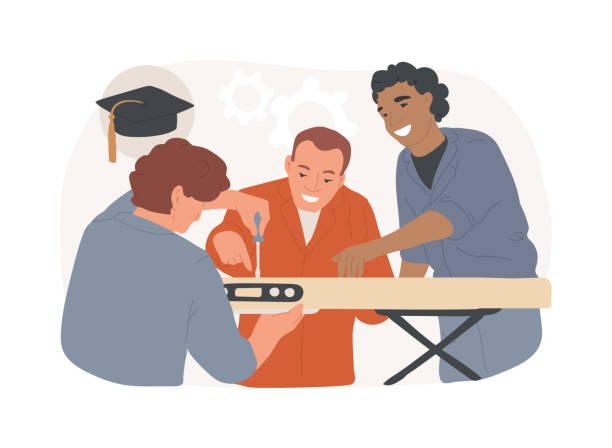
ITIs also have a number of challenges despite their significance. Most centers have outdated infrastructure. Trainers need not necessarily be industry terminated. The content of the course may be behind the existing technology. Vocational education and skill development in India are not possible in case these inconsistencies exist. It is necessary to have modern machines, revised syllabi, and training of trainers.
Skill India Mission and its purposes.
The new momentum in vocational education and skill development in India was introduced by the Skill India Mission. It was meant to educate millions of individuals in various industries. This mission has programs in short-term courses, certification, and placement assistance. Standardization is also a mission. The National Occupational Standards mark out the knowledge that a skilled worker should possess. This enhances the trust between employers. Important participation is also promoted by Skill India through the participation of the private training providers.
Significant plans of Skill India.
There are a number of programs that are run under Skill India. One of the most well-known ones is Pradhan Mantri Kaushal Vikas Yojana. It provides free training and evaluation. Emphasis on recognition of previous learning is also concerned. This assists employees with skills that lack certificates. It enhances movement and salaries. Training results are now monitored online. This brings in transparency and accountability.
The theory of the employability gap and its causes.
Most of the young Indians do not get employment despite having degrees. This is what is referred to as the employability gap. Graduates are believed to have no practical skills, and as an employer, vocational education and skill development in India are very explicit on this point. This disparity can be explained by the fact that education and industry have been working independently over the years. Problem-solving can not be taught in the classroom and applied on the shop floor. There is a lack of practical exposure. There should also be communication and work readiness. These are combined more through vocational pathways.
Partnership in industry-based training.
Training programs that are associated with the industry will be a game changer. They involve the employers in training. Firms assist in the development of courses. They offer apprenticeships. They give trainers or equipment. Vocational education and skill development in India become more applicable in those collaborations. Students acquire practices that are up to date. Employers receive employees that meet their demands. This reduces hiring costs.
Learning on the job and apprenticeships.
Apprenticeships are a form of learning and earning. They are effective instruments in vocational education and skill development in India. The apprentices are exposed to the actual workplace. They know the meaning of discipline, teamwork, and deadlines. Talent can be evaluated by the employers early. India has kept on increasing its apprenticeship structure over the last few years. An additional number of sectors are covered. Awareness is still limited. Apprenticeships are able to alter the perception of skills when marketed properly.
The importance of technology in training skills.
Vocational education is being transformed by technology. Practical learning is provided with the help of simulators, virtual laboratories, and online courses. Vocational education and skill development in India now contain digital skills as an essential element. Digital tools are used even in conventional trades. LMS monitors an improvement. The online testing enhances equity. The rural learners are also reached with the help of technology. The blended learning models are on the rise. Their impacts are cost reduction and flexibility.
Access and inclusion in vocational education.
Access is equal to quality. Vocational education and skill development in India should be accessible to women, rural young people, and disadvantaged groups. Working learners are assisted by the use of flexible schedules. Local training facilities minimize the travel obstacle. The participation is promoted by financial support. Most of the schemes are now concentrated on inclusive growth.
Vocational pathways, trust, and credibility.
The result of performance produces trust. When the students go to work, self-esteem increases. Credibility is enhanced when an employer observes performance. Critical evaluations are useful. It is important that the industry supports it. Trusting is achieved by transparency of the placement data. Eventually, career paths can receive the same respect as educational paths.
Outlook perspective and future direction of policies.
Vocational education in India has a bright future. Policy focus is strong. Industry demand is rising. Skilled workers are required in the global supply chains. Vocational education and skill development in India will be at the center of fulfilling this demand. Constant updates are required. Lifelong learning should become conventional. Technology must be able to change skills. Between the two, cooperation will characterize success.

Conclusion
Vocational education and skill development in India is not any longer a second choice. It is an economic development policy and social mobility. With ITIs to Skill India programs, there is positive development. Challenges remain. There are gaps of employability that should be monitored. Training based on industry provides viable solutions.
FAQs
What is vocational education and skill development in India?
It dwells on direct training that equips individuals with special occupations and sectors.
What are the effects of ITIs on skills development?
ITIs offer training based on trade and workshops.
What is the significance of involvement in industry in skill training?
It guarantees the alignment of skills and the actual job requirements and enhances employability.