
Secondary Education and Board Examination System in India
The Secondary education and board examination system in India plays a central role in shaping a student’s academic path. It establishes good backgrounds. It equips learners with advanced learning and professions. It is a phase that predetermines future possibilities to millions of families. The Secondary education and board examination system in India covers classes 9 to 12. It concludes with board examinations which are reputable. These tests affect the choice of subjects, self-esteem, and prospect. Knowledge of the operating of this system assists the parents and the students in making decisions.
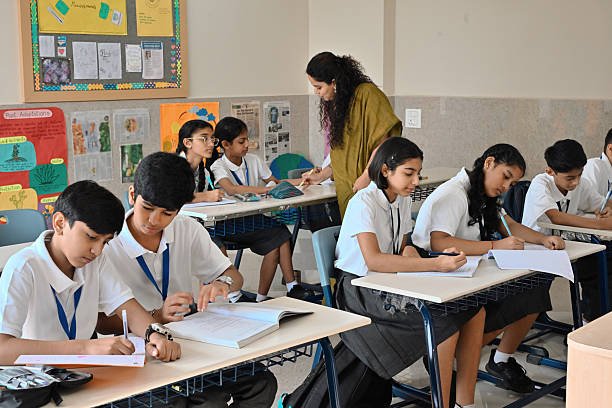
An overview of the Secondary Education in India.
Secondary education is concerned with knowledge, skills and discipline. The majors studied by the students encompass mathematics, science, languages and social studies. They also investigate major choices on interest basis. The Secondary education and board examination system in India aims to balance academics and personal growth. Educational institutions have vigilant schedules. Educators lead students by topics established by boards. It is a taxing stage, and it creates academic maturity.
The Indian Major Education boards.
The Secondary education and board examination system in India includes national and state-level boards. The boards have their own curriculum and methodology of assessment. All boards are supposed to have learning outcomes and bring about fairness, despite the differences.
CBSE Board Explained
Central Board of Secondary Education or CBSE happens to be one of the most famous boards. The other schools which come after it are the public and the private schools in India and other countries. CBSE dwells on a unified curriculum. It gives more importance to science and mathematics. Competitive exams training should match with CBSE. Experientially, CBSE has an upper hand over other curriculum programs because it is national and is very consistent. The Secondary education and board examination system in India benefits from CBSE’s structured approach and regular updates.
ICSE Board Explained
The Indian Certificate of Secondary Education or ICSE has got a reputation of having a detailed syllabus. It lays much emphasis on English language skills. Arts and humanities are also given attention. ICSE stresses on critical thinking and projects. Learners have a tendency to acquire a high level of communication skills. The Secondary education and board examination system in India gains depth through ICSE’s balanced academic design.
State Boards Explained
State Education departments have State Boards. They adhere to local demands and languages. Textbooks are in most cases more basic and localized. It is also available in terms of fees, which tend to be low. Nonetheless, the standards may differ depending on the states. The Secondary education and board examination system in India relies on State Boards to serve large student populations, especially in rural areas.
Curriculum Development and Teaching Model.
Student learning is influenced by the curriculum design. Boards make up the topics, curriculum and objectives of teaching. CBSE deals with the clarity of concept. ICSE emphasizes on precise knowledge. Accessibility is stressed out by State Boards. Such a transformation contributes to improved learning.
Pattern of examination and evaluation.
Board exams are subject based and are used to test knowledge and application. The predominating method is still written exams. Final scores are also scored through internal assessments. Practical tests are their practical skills in science and vocational subjects. The Secondary education and board examination system in India aims to be transparent and fair. The bias is minimized with the assistance of clear marking schemes. When assessing true character, digital assessment has enhanced accuracy over the recent years.
Students Under Pressure to study Exams.
Pressure at exams is a significant issue. Families and the society have high expectations that add to stress. College admissions are based on the satisfactory board results. This adds emotional burden. Based on actual experience, it is through balanced study plans that students can cope. Counselling in schools has become a reality. There is increased awareness on mental health. The Secondary education and board examination system in India must support well-being along with performance.
Role of Teachers and Schools
It is teachers who control learning and motivation. Trust is developed through their experience. Good schools are those schools offering both academic and emotional assistance. Frequent feedback assists the students to be improved. The Secondary education and board examination system in India depends on trained teachers who adapt to student needs. On-going training makes teachers abreast with reforms.
Recent Assessment Reforms
Reform in assessment is meant to minimize rote learning. The competency-based questions are rising. These are questions that are not concerned with memory but understanding. Inter-organizational evaluations are now more valuable. Other boards allowed several attempts at exams. This reduces fear of failure. The Secondary education and board examination system in India is slowly shifting toward flexible evaluation.
Use of Technology in Exams
Technology aids in learning and testing. During updating, the assistance of online materials is utilized. The results and admit cards are more efficient when digital. There are boards that administer practice tests online. The Secondary education and board examination system in India benefits from technology by saving time and improving transparency. Nevertheless, equal access is still valuable.
Parental Role and Support of student.
The confidence of students is affected by their parents. Positive counselling is better than coercion. Open communication is another factor that helps to decrease anxiety. Parents and schools have to cooperate. The Secondary education and board examination system in India works best when students feel encouraged and safe.
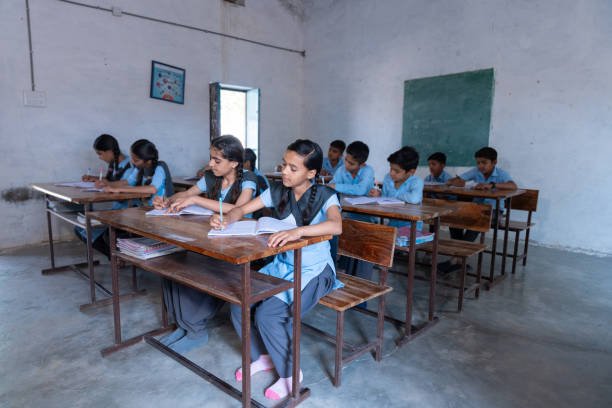
Pyrrhonism and Equity Issues and Accessibility.
All students do not possess equal resources. The rural communities experience lack of trained teachers and facilities. There is also the language barrier. The digital platforms are assisted by scholarships and bridging. The Secondary education and board examination system in India continues to address equity through policy support and outreach programs.
Outlook of Secondary Education in future.
The future is concerned with talents and versatility. Boards are updating the syllabi on a regular basis. Career guidance is becoming more significant. Students are able to venture into interests at an earlier age. The Secondary education and board examination system in India is moving toward holistic education that values creativity and critical thinking.
Conclusion
The Secondary education and board examination system in India shapes academic and personal development. There are various options of CBSE, ICSE and State Boards. Curriculum Pattern and evaluation is becoming dynamic.
FAQs
Which board is best in the Secondary education and board examination system in India?
Each board has strengths. The ideal selection is based on the needs of the student, his / her learning style and future aspirations.
So, what is the deal with board exams is so stressful?
Board exams affect college admissions and career choices that adds stress and pressure.