
Primary education challenges in India
Primary school determines the future of the child. It develops minimal reading, writing and contemplating. Millions of children in India come into the school with hope and curiosity. But there are numerous ones, who are set back in their strides. Primary education challenges in India affect learning quality, access, and long-term outcomes. These issues are not the ones that have never been encountered, yet they require new considerations. Through actual experiences in the classrooms, policy reports, as well as ground observations, this article clarifies the major issues in a simple manner.
The importance of primary education.
Schooling at a young age determines the level at which a child grows to acquire knowledge. Firm background facilitates senior schooling. Poor foundations leave loopholes that are difficult to repair. Primary education challenges in India often begin at this early stage. When these problems are not solved, they extend to the whole education system.
One of the areas that is still of concern is learning outcomes.
One of the most serious Primary education challenges in India is low learning outcomes. Quite a number of children finish primary school without knowing how to read and math. Learners have been surveyed to reveal that they have a hard time reading easy passages, or doing basic arithmetic. This is not because they lack the ability. It is usually a product of poor teaching, overcrowding and poor emphasize. Children are shifted into upper classes without the mastering of basics. In the course of time, this disparity increases and has an impact on confidence and school interest.
Lack of teachers and their unequal spread.
Primary education is in the hands of teacher’s other schools possess inadequate number of teachers. There are those that have teachers that have to deal with two or more classes simultaneously. This has a direct influence on quality of learning. Primary education challenges in India also include uneven teacher distribution. In urban schools, there is a tendency to have better qualified teachers. They are not retained in rural and remote schools. This disparity results in disproportionate education to children.
Lack of training and support in teachers.
There is a possibility of teachers being ineffective due to lack of appropriate training or support even where their presence is availed. Special skills are required during the teaching of young children. It takes time, imagination and knowledge on child psychology. A large number of the teachers are not trained regularly. Others are using archaic procedures. This renders lessons less interesting. Due to it, children lose interest. Improving training is essential to address Primary education challenges in India in a meaningful way.
Gap in infrastructure in schools.
School buildings are not as minor as they could seem to be. Good furniture, clean drinking water, clean toilet, and safe classrooms will result in a healthy learning environment. Regrettably, dismals such as infrastructure checks are usual. In most schools, there is not adequate classroom and learning material. Others are provisional in nature. These are the conditions, which influence attendance and responsibility.
Poor availability of learning materials.
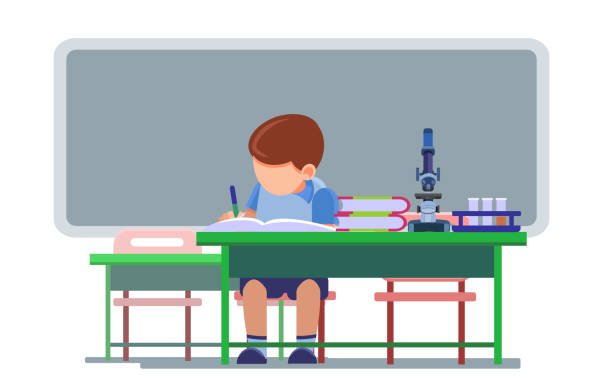
Children are better learners with the help of books, charts, and activity-based tools. Such resources are either inadequate or old fashioned in most primary schools. Digital technology may come to the rescue, though access is not even. Smart classrooms are more predominant in urban schools. The primary schools in the countryside do not have power or an internet connection. This resource gap deepens Primary education challenges in India and limits equal opportunities.
Education inequalities between rural and urban areas.
Rural–urban differences are among the most discussed Primary education challenges in India. As a rule, urban schools have facilities, teachers and high exposure. Rural schools cater to the children of agricultural or daily wage families. Such children will skip school days in harvest periods or when doing chores. There is also language barrier.
Factors of socioeconomic influences on attendance.
Poverty has become an unspoken stigma. Certain families rely on children as a source of support in the household. People are not able to afford homogenized stays or materials. There are schemes, but there is no equal awareness and access. Midday meals have enhanced attendance, although there are problems. These social factors are closely linked to Primary education challenges in India and cannot be ignored.
Gender and inclusion issues
India has improved on enrolment of girls in primary schools. Nevertheless, there are still difficulties in certain areas. Attendance is influenced by safety issues, premature responsibilities, and culture. Inclusion is a critical part of solving Primary education challenges in India at the foundational level.
Participation of government policies and programs.
The quality is intended to be enhanced through initiatives of the government such as the Right to Education Act and basic literacy programs. These policies are demonstrative of a dedication and power. Strong policies alone cannot solve Primary education challenges in India without effective execution and community support.
Parent and community intervention.
Parents are critical in early learning. Children do better in cases where the families value education. Parents are not aware or time-lack in some places. When communities participate in schools, it works out. Building trust between schools and families helps reduce Primary education challenges in India from the ground up.
Technology support and not solution.
The use of technology in supporting learning can be wise. Interactive lessons can be provided with the use of simple digital tools. But technology cannot be a magic solution. In the absence of trained teachers and access, it may increase disparities. Balanced use of technology can help address Primary education challenges in India, but only as part of a broader strategy.
The path forward
It takes patience and cooperation in order to solve these issues. Communities, teachers, parents and policy makers should collaborate. Focus on basics. Invest in teachers. Improve infrastructure. Respect local needs.
Conclusion
Education at the primary school level is the driving force behind a great nation. India possesses the magnitude, ability and desire to do it. These are real challenges that can be overcome. The enhancements can be made by meeting the learning requirements, teacher deficiencies, infrastructural requirements, and rural urban disparities. Understanding Primary education challenges in India is the first step. Treating them carefully, experience-wise, and with trust will create a brighter future of millions of children.
FAQs
What is the impact of teacher shortage in terms of primary education?
A reduced number of teachers will result in bigger classes and the lack of attention to each child thereby reducing the level of learning.
Will government initiatives provide the solutions to these issues?
Government programs implemented assist however community support, trained teachers, and proper implementation are equally as significant.