
Online education and EdTech in India
Online education and EdTech in India have transformed the process of learning in urban areas, towns, and villages. What was initially viewed as a support mechanism has now become a primary learning platform for several learners. This transformation has been advanced by affordable internet, cell phones, and online technologies. Ellis is unknown to school learners, college students, working adults, and lifelong learners. This expansion has not been anything random. It is representative of actual requirements, actual gaps, and actual opportunities within the education system.
The knowledge of online education in India.
Online learning entails learning using digital means as opposed to just the physical classes. It consists of video recordings, live lessons, quizzes, discussion boards, and online testing. Online education and EdTech in India comprise quite diverse formats. Others are devoted to exam preparation. Others are skills-based, degree-based, or certification-based. The goal is simple. Make education adaptable, cheap, and available.
Growth of tech platforms in India.
There has been a swift development of EdTech platforms. Companies and new ones have spent a lot of money on content, technology, and teachers. Online education and EdTech in India boomed in the course of the pandemic. Colleges and schools were forced to get digital. Learning at home proved to be convenient for many students. Digital platforms were still expanding even after reopening. This demonstrates that the change is not short-term. It is structural.
Social niches in EdTech.
Online education and EdTech in India serve multiple segments. One area that is still significant is in K-12 education. Another good segment is the competitive exam preparation. Tertiary education and professional training are also increasing rapidly. Working adults are interested in coding, data analysis, courses in digital marketing, and finance. There is also high demand in language learning systems. The learners in each of the segments have varied expectations, and they are the same. Quality, clarity, and results are the most important.
The emergence of hybrid education is on the rise.
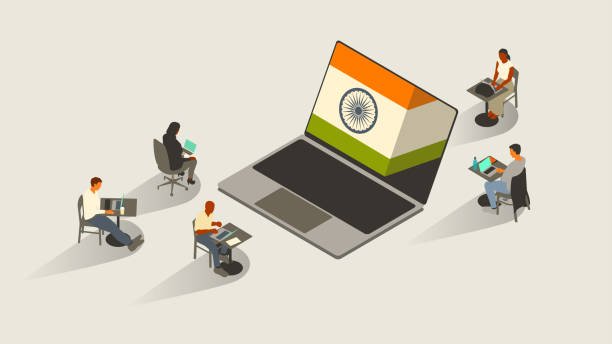
Hybrid learning is intended to be learning that incorporates both online and offline learning. It is a perfect combination of the two worlds. Students are attending face-to-face classes but revising and practicing through digital means. Smart classrooms are used in schools. Colleges record lectures. The availability of coaching centers is both recorded and live. The hybrid models enhance flexibility. They also favor the various learning speeds.
Benefits of hybrid learning
The hybrid learning assists students to keep in touch. It reduces travel time. It enables a continuous revision. Online education and EdTech in India support this model with the help of apps, dashboards, and analytics. Educators are more monitoring. Students receive immediate responses. Parents stay informed. Disruptions such as weather conditions or health problems are also addressed with the help of hybrid education. It incorporates strength into the system.
The availability and accessibility in India.
Online learning promises accessibility. Without relocation, rural students are enabled to be exposed to quality teachers. Recorded material assists learners to study at any time. Nonetheless, everywhere access is not equal. Internet quality varies. Availability of devices is still an issue. There are also language barriers. Regional content and low-bandwidth solutions are slowly resolving these problems through platforms.
The digital divide and its effect.
The digital divide is real. Not all students have a smartphone or even stable internet. Digital learning can enhance inequality when access is not available. The governments strive to increase connectivity. It has been provided on some platforms offline. Learning centers among the community also contribute. The bridge will need concerted efforts on the part of the policymakers or people in charge, as well as the local governments.
In online learning, teachers play a role.
Educators are still involved in learning. Technology aids and does not substitute them. Online education and EdTech in India work best when teachers put flexible approaches into practice. Clear explanations matter. Engagement matters. Better results are realized on platforms that train teachers. Trust is created in interactive sessions and doubt-solving. In the digital environment, students appreciate the importance of human contact with one another.
Quality and content quality standards.
Different platforms have different quality. Others contain great content. Some care more about marketing. Online education and EdTech in India require excellent standards of quality. Students have to believe what they are paying for. Synthetic learning outcomes are beneficial. Transparent reviews help. Courses facilitated by experts enhance credibility. Long-term success is created through quality assurance.
Regulatory issues and reaction policy.
Regulation is becoming more complex. Online education and EdTech in India are operating on a complex plane. It is a sensitive area of education. They involve privacy of data, price, and validity of certification. Regulators are seeking to safeguard students and not slack innovation. Online degree guidelines have been made clearer. The regulations on data protection are tightening up. Well-balanced regulation helps to build trust and grow.
Pricing and affording models.
Adoption is a factor of affordability. A lot of websites provide free access with premium services. The subscription models are typical. Online education and EdTech in India benefit in circumstances where the pricing remains transparent. Hidden costs reduce trust. White belts and installment plans assist students with a low-income background. Wider participation is guaranteed by a cheaper price.
Employability/relevance of skills.
Employability is one of the primary aims of online learning. Online education and EdTech in India are starting to pay more attention to job-ready skills. Courses that are industry-oriented appeal to learners. The real skills-based certification is more important than brand names. Placement service value addition. Confidence is gained when the learners view outcomes of careers.
Experience, credibility, and experience in EdTech.
Trust builds over time. News sources with seasoned teachers are effective. Online education and EdTech in India are based on the expertise of the subject, time-tested methods of teaching, and ethical reporting. It has learner testimonials to provide some credibility. Crystal-clear success measures assist the users in making good decisions. Power is derived by achievements and not assertions.
Online education in India: Future.
Online education and EdTech in India will persist in evolving and being learner-centered. Learning can be personalized by means of artificial intelligence. The regional content will increase. The practice of lifelong learning will become normal. Digital platforms will collaborate with the traditional institutions. The goal will remain the same. Learning to a greater number of individuals better.
Conclusion
God help me, online education and EdTech in India have changed the education picture. Digital channels created consumption and selection. Flexibility was enhanced with hybrid models. Such issues as accessibility and regulation persist. The answers to the situations are coming up by way of policy, innovation, and broadening cooperation. Online education and EdTech in India can serve millions of learners due to its high quality and trust as well as inclusion. It has the potential to complement the old systems and make India ready to have a knowledge-based future.
FAQs
What is online education and EdTech in India?
It is used to refer to online platforms that provide learning using technological tools and platforms.
What are the advantages of hybrid education for students?
It integrates the classroom learning with the digital materials in order to be more flexible and revisable.
Are there any regulations on the online courses in India?
Yes, there are guidelines; regulations keep on changing to safeguard the learners.